Author name: Vikas

Business & Growth

SEO Basics Every Business Owner Should Understand

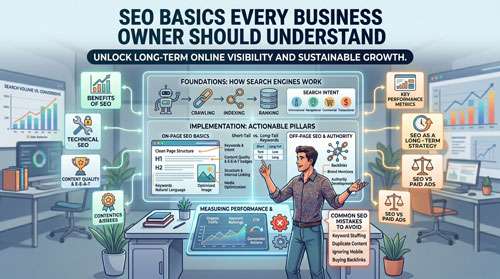
Introduction to SEO Basics Search engines are one of the primary gateways to information on the internet. When users want to learn, compare, or evaluate options, they usually begin with a search query. This is why SEO basics every business owner should understand play a vital role in long-term online visibility. SEO, or Search Engine Optimization, is not about gaming algorithms or chasing trends. It is about aligning a website with how search engines and users naturally behave. When SEO basics are applied correctly, they create steady traffic, credibility, and measurable growth over time. Many people assume SEO is overly technical or constantly changing. In reality, the fundamentals remain stable. Understanding these basics allows informed decision-making, better collaboration with professionals, and realistic expectations. What SEO Means in Simple Terms SEO is the process of improving a website so that search engines can: SEO focuses on relevance, clarity, usability, and trust. When these elements align, search engines are more likely to rank a page higher. Why SEO Is Critical for Long-Term Growth Unlike short-term marketing tactics, SEO compounds. Well-optimized content can continue attracting traffic for months or years after publication. Benefits of strong SEO fundamentals include: SEO does not replace other channels, but it strengthens the entire digital ecosystem. SEO vs Paid Marketing Channels Paid advertising delivers immediate visibility but stops when spending ends. SEO requires time and consistency but produces lasting results. A balanced strategy often includes both. However, SEO provides the foundation that supports sustainable growth and reduces long-term acquisition costs. How Search Engines Work Understanding how search engines function makes SEO basics easier to apply. Crawling, Indexing, and Ranking Search engines follow a three-step process: If a page cannot be crawled or indexed, it cannot rank. That is why technical SEO fundamentals matter. Understanding Search Intent Search intent refers to the reason behind a query. Most searches fall into four categories: SEO basics emphasize matching content to intent. Pages that align closely with user intent perform better in search results. Core Ranking Signals Search engines use many signals, but foundational ones include: Strong SEO basics focus on optimizing these consistently rather than chasing minor factors. Technical SEO Fundamentals Technical SEO ensures that a website functions properly for users and search engines. Key elements include: Official guidance from search engines can be found athttps://developers.google.com/search/docs On-Page SEO Basics On-page SEO refers to optimizations made directly on a website. Keyword Research and Topic Relevance Keywords connect user searches with content. Modern SEO basics focus on topics and intent rather than repeating exact phrases. Effective keyword usage involves: Short-Tail and Long-Tail Keywords Keyword Type Description Benefit Short-tail Broad, high-volume terms Visibility Long-tail Specific, lower-volume phrases Higher intent Long-tail keywords often attract more qualified traffic. Content Quality and E-E-A-T Search engines evaluate content using E-E-A-T: High-quality content is accurate, clear, and helpful. It answers questions fully and avoids exaggeration. Page Structure and Internal Linking Clear structure improves both usability and SEO. Best practices include: Internal linking helps search engines understand relationships between pages and distribute authority. Image and Media Optimization Optimized media improves page speed and accessibility: These SEO basics contribute to better user experience and performance. Off-Page SEO Basics Off-page SEO focuses on external signals that indicate trust and authority. Backlinks and Authority Backlinks are links from other websites pointing to your content. Quality backlinks signal credibility. Effective backlink practices include: Authority develops gradually and naturally. Brand Signals and Mentions Search engines recognize brand mentions, reviews, and citations as trust indicators. Even unlinked mentions can contribute to perceived authority. Consistency across platforms strengthens these signals. Local and Global SEO Considerations SEO basics apply globally, but location-based factors can influence results. Elements such as localized content, region-specific keywords, and consistent listings help align with geographic intent. Measuring SEO Performance and Avoiding Mistakes SEO is measurable when the right metrics are tracked. Key SEO Metrics to Track Important metrics include: These metrics reveal both technical health and content effectiveness. Common SEO Mistakes Many SEO issues come from misunderstanding the basics: Avoiding these mistakes protects long-term performance. SEO as a Long-Term Strategy SEO rewards patience and consistency. Results often appear gradually, but they tend to be more stable than short-term tactics. Viewing SEO as an ongoing process rather than a one-time task leads to better outcomes. Frequently Asked Questions What are SEO basics? SEO basics are the foundational practices that help search engines understand, evaluate, and rank web pages effectively. How long does SEO take to work? SEO typically takes several months to show measurable results, depending on competition, content quality, and consistency. Is SEO still relevant? Yes. Search remains a primary discovery method, and SEO continues to evolve alongside user behavior and technology. Can SEO work without paid ads? Yes. SEO can generate traffic independently, though combining it with paid channels can accelerate results. Do small websites benefit from SEO? Absolutely. SEO basics help websites of all sizes improve visibility and usability. Is SEO technical? Some aspects are technical, but many SEO basics focus on content quality, structure, and user experience. Conclusion Understanding SEO basics every business owner should understand creates clarity in a complex digital environment. SEO is not about shortcuts or manipulation. It is about building relevance, trust, and usability over time. By mastering the fundamentals—how search engines work, how content is evaluated, and how authority is built—organizations position themselves for sustainable growth. When SEO basics are applied consistently, they support visibility, credibility, and long-term success.
Business & Growth

How Visual Consistency Builds Trust: The Proven Framework with 7 Powerful Principles

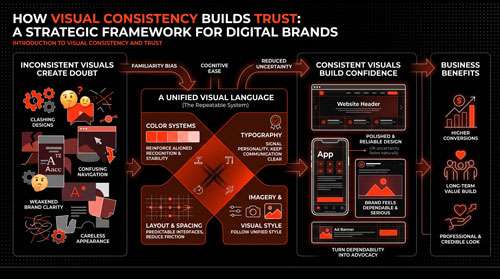
Introduction to Visual Consistency and Trust How visual consistency builds trust is not just a design theory—it’s a business reality. In today’s digital-first world, users decide whether to trust a brand in seconds. Before they read your content or evaluate your product, they see your brand. That visual experience shapes perception immediately. Visual consistency helps brands appear reliable, professional, and credible. When design elements remain consistent across platforms, users feel comfortable. And comfort leads to trust. In fact, studies from usability experts like Nielsen Norman Group show that consistency reduces cognitive load, making interfaces easier to understand and trust (https://www.nngroup.com). That’s a powerful edge in a competitive digital landscape. This article breaks down how visual consistency builds trust, why it works psychologically, and how businesses can apply it effectively—without overcomplicating design decisions. What Is Visual Consistency in Design? Visual consistency means using the same visual language across all brand touchpoints. This includes websites, apps, social media, presentations, and marketing materials. When everything looks and feels connected, users don’t have to relearn how to interact with your brand each time. That familiarity builds confidence. Core Elements of Visual Consistency Color Systems Colors carry emotional weight. When brands change colors randomly, it creates confusion. A consistent color palette reinforces recognition and stability. Typography Fonts signal personality. Mixing too many typefaces weakens brand clarity. Consistent typography keeps communication clear and professional. Layout and Spacing Predictable layouts help users navigate faster. Consistent spacing, grid systems, and alignment reduce friction and frustration. Imagery and Visual Style Photos, illustrations, and icons should follow a unified style. When visuals clash, trust drops—even if users can’t explain why. The Psychology Behind Visual Consistency Understanding how visual consistency builds trust requires looking at human psychology. Familiarity Bias and Cognitive Ease People trust what feels familiar. Consistent visuals trigger recognition, and recognition lowers mental effort. When users don’t have to think hard, they feel safe. Consistency and Brand Recall Brands with consistent visuals are easier to remember. Repetition strengthens memory, and memory strengthens trust over time. In simple terms:What looks familiar feels reliable. How Visual Consistency Builds Trust in Digital Brands First Impressions and Credibility Users form opinions within seconds. A polished, consistent design signals that a brand is serious, experienced, and dependable. In contrast, inconsistent visuals feel careless. And if a brand looks careless, users assume it is careless. Reducing User Uncertainty Consistency answers unspoken questions: When visuals align across pages and platforms, uncertainty fades. Trust grows naturally. This is exactly how visual consistency builds trust—quietly, steadily, and effectively. Visual Consistency Across Platforms Websites Your website is often the first touchpoint. Consistent headers, buttons, colors, and typography guide users smoothly through content and actions. Social Media Profiles, posts, and stories should feel connected to your main brand. When users move from Instagram to your website, the transition should feel seamless. Marketing and Advertising Ads that match your brand style improve recognition and credibility. Visual disconnects between ads and landing pages reduce trust and conversions. Business Benefits of Visual Consistency Higher Conversions Trust reduces hesitation. When users feel confident, they’re more likely to sign up, inquire, or buy. Stronger Brand Loyalty Consistent brands feel dependable. Over time, that dependability turns into loyalty and advocacy. Businesses that understand how visual consistency builds trust don’t chase trends blindly—they build long-term value. Common Mistakes That Break Visual Consistency These mistakes may seem small, but together they erode trust fast. How to Build and Maintain Visual Consistency Brand Guidelines Document colors, fonts, spacing rules, and imagery styles. This becomes your visual rulebook. Design Systems A design system standardizes components like buttons, forms, and cards. It ensures consistency at scale. Team Alignment Everyone—from designers to marketers—must follow the same visual standards. Consistency is a team effort. Real-World Examples of Visual Consistency Brands like Apple, Airbnb, and Stripe are trusted not just because of products—but because of visual discipline. Every interaction feels familiar, intentional, and refined. That’s how visual consistency builds trust over years, not days. Frequently Asked Questions (FAQs) 1. Why does visual consistency matter for trust? Because consistency creates familiarity, and familiarity makes users feel safe and confident. 2. Can small businesses benefit from visual consistency? Absolutely. Consistency levels the playing field by making small brands appear professional and credible. 3. How visual consistency builds trust in websites specifically? It reduces confusion, improves navigation, and signals reliability through predictable design patterns. 4. Is visual consistency more important than content? Both matter, but visuals create the first impression that determines whether users engage with content at all. 5. How often should brand visuals be updated? Updates should be strategic and gradual. Sudden visual changes can break trust if not handled carefully. 6. Does visual consistency affect SEO? Indirectly, yes. Better trust leads to longer engagement, lower bounce rates, and stronger brand signals. Conclusion How visual consistency builds trust isn’t a mystery—it’s a repeatable system. When brands commit to consistent colors, typography, layouts, and imagery, they send a clear message: we’re reliable. In a noisy digital world, trust is earned through clarity and repetition. Visual consistency delivers both. If you want users to believe in your brand, start by making it visually dependable—everywhere, every time.

Portfolio Website vs Business Website
Business & Growth

Portfolio Website vs Business Website: Know the Difference (7 Key Insights)

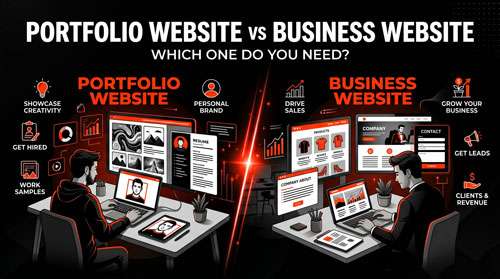
Introduction to Portfolio Website vs Business Website The debate around portfolio website vs business website often confuses creators, founders, and even established companies. Many assume a website is just a website. However, that assumption can quietly cost you clients, credibility, and long-term growth. A portfolio website and a business website serve very different purposes. While both exist online, their intent, structure, content, and success metrics are not the same. Choosing the wrong one can limit your reach. Choosing the right one can accelerate trust and conversions. In today’s digital-first world, your website is usually the first interaction someone has with your brand. That first impression matters. Whether you’re a photographer, designer, gym owner, or digital agency, understanding the difference between a portfolio website vs business website helps you build the right digital foundation. This guide breaks it all down in plain English. No fluff. No jargon overload. Just clarity, structure, and practical insight. What Is a Portfolio Website? A portfolio website is primarily a showcase platform. It highlights your work, skills, and creative ability rather than pushing direct sales. Core Purpose of a Portfolio Website The main goal of a portfolio website is credibility. It answers one simple question:“Can you actually do what you claim?” A portfolio website lets your work speak for itself. Instead of long explanations, visitors see real projects, visuals, and outcomes. This format builds trust fast, especially in creative industries. Who Needs a Portfolio Website Most Portfolio websites are ideal for: If your work is visual or experiential, a portfolio website makes sense. In the portfolio website vs business website comparison, portfolios lean more toward proof than persuasion. Key Features of a Portfolio Website Common features include: Portfolio websites often avoid heavy CTAs. They rely on emotional impact and aesthetic clarity. What Is a Business Website? A business website is built to convert visitors into customers. It’s not just about showing what you do—it’s about selling why someone should choose you. Core Purpose of a Business Website The primary purpose is growth. A business website is designed to: In the portfolio website vs business website discussion, this is where strategy takes center stage. Who Needs a Business Website Business websites are essential for: If revenue, scalability, and marketing matter, a business website is non-negotiable. Key Features of a Business Website Typical elements include: Unlike a portfolio website, every section of a business website serves a measurable goal. Portfolio Website vs Business Website: Key Differences Explained This is where the comparison becomes crystal clear. Goal & Intent Aspect Portfolio Website Business Website Primary Goal Showcase work Generate revenue Visitor Action View & evaluate Contact, buy, convert Focus Visual proof Business outcomes Content Structure Portfolio websites prioritize: Business websites prioritize: Conversion Focus A portfolio website might have one contact button.A business website strategically places CTAs throughout the site. That’s a major difference in the portfolio website vs business website debate. SEO & Scalability Portfolio websites: Business websites: Design Approach: Portfolio vs Business Website Design philosophy changes drastically between the two. Portfolio websites: Business websites: A portfolio website can afford to be artistic. A business website must be effective first. SEO, Marketing & Growth Perspective From a marketing lens, the portfolio website vs business website difference becomes even sharper. Business websites support: Portfolio websites typically: If long-term discoverability matters, business websites win. For SEO best practices, you can reference Google’s own documentation on site structure and content quality (external authority):https://developers.google.com/search/docs When Should You Choose a Portfolio Website? Choose a portfolio website if: In the portfolio website vs business website decision, portfolios shine when personal craft is the product. When Should You Choose a Business Website? Choose a business website if: A business website supports systems, not just aesthetics. Can You Combine a Portfolio Website and Business Website? Yes—and this is often the smartest move. Many modern brands blend both: This hybrid approach gives you the best of both worlds and resolves the portfolio website vs business website dilemma entirely. Common Mistakes People Make Your website should evolve with your business. FAQs 1. Is a portfolio website enough to get clients? It can work initially, but long-term growth usually requires a business website structure. 2. Can a business website include a portfolio? Absolutely. Case studies are powerful conversion tools. 3. Which is better for SEO: portfolio website vs business website? A business website performs better for SEO due to structured content and scalability. 4. Do freelancers need a business website? Freelancers starting out may use portfolios, but scaling freelancers benefit from business websites. 5. Can I start with a portfolio and upgrade later? Yes. Many brands evolve this way. 6. Which option builds more trust? Both build trust differently—portfolios through proof, business websites through clarity and authority. Conclusion The portfolio website vs business website debate isn’t about which is better universally. It’s about what fits your goals right now. A portfolio website showcases talent.A business website builds growth. Choose wisely—or blend both. Your website isn’t just a digital presence. It’s a business asset. Treat it like one.

Business & Growth

Why Creative Businesses Need a Website — Not Just Instagram: 9 Powerful Reasons

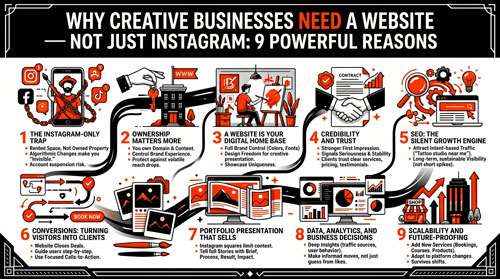
1. The Instagram-Only Trap Creative businesses love Instagram—and for good reason. It’s visual, fast, and easy to start. Photographers, tattoo studios, designers, gyms, and artists often build their first audience there. However, relying only on Instagram is risky. How Creative Businesses Fell Into Social-Only Marketing Instagram lowered the barrier to entry. You didn’t need a domain, hosting, or technical knowledge. Post your work, add a caption, and boom—you’re “online.” For many creative businesses, Instagram felt like a complete solution. But here’s the catch: Instagram was never designed to be your business foundation. It’s a rented space, not owned property. The False Sense of Security Instagram Creates Followers feel like assets. Likes feel like validation. But when reach drops, engagement dips, or accounts get restricted, businesses realize how fragile this setup is. A creative business without a website is one algorithm update away from invisibility. That’s exactly why creative businesses need a website—not as a replacement for Instagram, but as a backbone. 2. Ownership Matters More Than You Think One of the biggest reasons why creative businesses need a website is ownership. You Don’t Own Your Instagram Audience Instagram controls who sees your posts. Even your followers may never see your work unless you pay for ads. Worse, if your account is suspended or hacked, years of effort can disappear overnight. With a website: That level of control is non-negotiable for long-term growth. What Happens When Reach Drops Overnight Many creative businesses experience sudden drops in reach. One day your reels perform well; the next week, nothing moves. When Instagram is your only channel, your business slows down instantly. A website protects you from this volatility. Search traffic, referrals, and direct visits don’t vanish overnight. 3. A Website Is Your Digital Home Base Think of Instagram as a busy street. Your website? That’s your studio. Full Control Over Brand Experience On a website, everything reflects your brand: Creative businesses thrive on uniqueness. Instagram forces everyone into the same box. A website lets you stand out. Design Freedom for Creative Businesses For photographers, tattoo artists, designers, and fitness brands, presentation matters. A website allows immersive galleries, storytelling layouts, and smooth navigation that Instagram simply can’t offer. This is another core reason why creative businesses need a website to grow professionally. 4. Credibility and Trust in the Creative Industry Clients don’t just buy creativity—they buy confidence. First Impressions Still Matter When someone searches your name and finds a professional website, trust increases instantly. A website signals seriousness, stability, and legitimacy. Instagram alone can feel informal, even temporary. Why Clients Trust Websites More Than Profiles Websites allow: According to research shared by Google, users trust businesses with strong web presence more than social-only brands (source: https://www.google.com/business). Trust is one of the strongest conversion drivers—and websites build it better. 5. SEO: The Silent Growth Engine Instagram is noisy. SEO is quiet but powerful. How Websites Attract Intent-Based Traffic People searching on Google already want something: A website allows creative businesses to appear exactly at that moment of intent. Instagram can’t do that reliably. Long-Term Visibility vs Short-Term Reach Instagram posts last hours or days. A well-optimized website page can bring traffic for years. That’s why creative businesses need a website for sustainable growth, not just attention spikes. 6. Conversions: Turning Visitors Into Clients Attention doesn’t pay bills. Conversions do. Instagram Is for Discovery, Websites Close Deals Instagram inspires. Websites convince. On a website, you can: This is where real business happens. Calls-to-Action That Actually Convert Websites allow focused CTAs: These actions are harder to execute effectively on Instagram alone. 7. Portfolio Presentation That Sells Creative work deserves context. Why Instagram Grids Limit Storytelling Instagram compresses everything into squares or reels. There’s little room for explaining: A website lets you tell full stories. Case Studies Beat Random Posts Case studies show thinking, not just output. For designers, photographers, and studios, this is gold. It’s another clear reason why creative businesses need a website to attract serious clients, not just followers. 8. Data, Analytics, and Business Decisions Guessing isn’t a strategy. Why Insights Matter for Growth Websites provide deep insights: This data helps creative businesses refine offerings and messaging. Instagram Analytics vs Website Analytics Instagram shows engagement. Websites show intent. Knowing what pages people read before contacting you is far more valuable than knowing how many likes a post got. 9. Scalability and Future-Proofing Creative businesses evolve. Adding New Services and Revenue Streams Want to add: A website scales with you. Instagram doesn’t. Adapting to Algorithm Changes Platforms come and go. Websites remain. Owning a website ensures your brand survives shifts in trends and technology. Website + Instagram: The Power Combo This isn’t an either-or decision. How Smart Creative Businesses Use Both Instagram: Website: Together, they’re powerful. Traffic Flow Between Platforms Instagram should drive traffic to your website. Your website should capture leads and convert them into clients. This balanced ecosystem is exactly why creative businesses need a website even if Instagram is working “fine.” FAQs 1. Is Instagram not enough for creative businesses? Instagram is great for visibility, but it’s not enough for long-term growth, credibility, and conversions. A website provides stability and control. 2. Do small creative businesses really need a website? Yes. Even a simple website builds trust, improves discoverability, and helps convert visitors into paying clients. 3. What should a creative business website include? A strong homepage, portfolio, services, about section, testimonials, and a clear contact or inquiry flow. 4. Can a website help me get clients without ads? Absolutely. SEO-driven websites attract organic traffic from people actively searching for your services. 5. Is maintaining a website expensive? Not necessarily. Compared to paid ads and lost opportunities, a website is a cost-effective long-term investment. 6. Should I stop using Instagram after building a website? No. Use Instagram to support your website. The goal is integration, not replacement. Conclusion Instagram is a powerful tool—but it’s not a foundation. Creative businesses that rely only on social platforms build on unstable ground. A website provides