SEO Basics Every Business Owner Should Understand
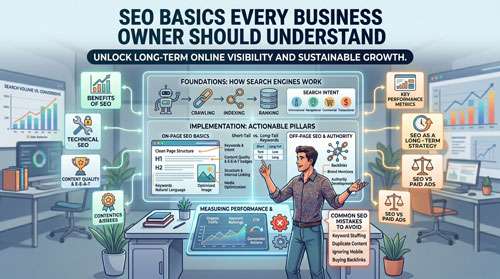
Introduction to SEO Basics Search engines are one of the primary gateways to information on the internet. When users want to learn, compare, or evaluate options, they usually begin with a search query. This is why SEO basics every business owner should understand play a vital role in long-term online visibility. SEO, or Search Engine Optimization, is not about gaming algorithms or chasing trends. It is about aligning a website with how search engines and users naturally behave. When SEO basics are applied correctly, they create steady traffic, credibility, and measurable growth over time. Many people assume SEO is overly technical or constantly changing. In reality, the fundamentals remain stable. Understanding these basics allows informed decision-making, better collaboration with professionals, and realistic expectations. What SEO Means in Simple Terms SEO is the process of improving a website so that search engines can: SEO focuses on relevance, clarity, usability, and trust. When these elements align, search engines are more likely to rank a page higher. Why SEO Is Critical for Long-Term Growth Unlike short-term marketing tactics, SEO compounds. Well-optimized content can continue attracting traffic for months or years after publication. Benefits of strong SEO fundamentals include: SEO does not replace other channels, but it strengthens the entire digital ecosystem. SEO vs Paid Marketing Channels Paid advertising delivers immediate visibility but stops when spending ends. SEO requires time and consistency but produces lasting results. A balanced strategy often includes both. However, SEO provides the foundation that supports sustainable growth and reduces long-term acquisition costs. How Search Engines Work Understanding how search engines function makes SEO basics easier to apply. Crawling, Indexing, and Ranking Search engines follow a three-step process: If a page cannot be crawled or indexed, it cannot rank. That is why technical SEO fundamentals matter. Understanding Search Intent Search intent refers to the reason behind a query. Most searches fall into four categories: SEO basics emphasize matching content to intent. Pages that align closely with user intent perform better in search results. Core Ranking Signals Search engines use many signals, but foundational ones include: Strong SEO basics focus on optimizing these consistently rather than chasing minor factors. Technical SEO Fundamentals Technical SEO ensures that a website functions properly for users and search engines. Key elements include: Official guidance from search engines can be found athttps://developers.google.com/search/docs On-Page SEO Basics On-page SEO refers to optimizations made directly on a website. Keyword Research and Topic Relevance Keywords connect user searches with content. Modern SEO basics focus on topics and intent rather than repeating exact phrases. Effective keyword usage involves: Short-Tail and Long-Tail Keywords Keyword Type Description Benefit Short-tail Broad, high-volume terms Visibility Long-tail Specific, lower-volume phrases Higher intent Long-tail keywords often attract more qualified traffic. Content Quality and E-E-A-T Search engines evaluate content using E-E-A-T: High-quality content is accurate, clear, and helpful. It answers questions fully and avoids exaggeration. Page Structure and Internal Linking Clear structure improves both usability and SEO. Best practices include: Internal linking helps search engines understand relationships between pages and distribute authority. Image and Media Optimization Optimized media improves page speed and accessibility: These SEO basics contribute to better user experience and performance. Off-Page SEO Basics Off-page SEO focuses on external signals that indicate trust and authority. Backlinks and Authority Backlinks are links from other websites pointing to your content. Quality backlinks signal credibility. Effective backlink practices include: Authority develops gradually and naturally. Brand Signals and Mentions Search engines recognize brand mentions, reviews, and citations as trust indicators. Even unlinked mentions can contribute to perceived authority. Consistency across platforms strengthens these signals. Local and Global SEO Considerations SEO basics apply globally, but location-based factors can influence results. Elements such as localized content, region-specific keywords, and consistent listings help align with geographic intent. Measuring SEO Performance and Avoiding Mistakes SEO is measurable when the right metrics are tracked. Key SEO Metrics to Track Important metrics include: These metrics reveal both technical health and content effectiveness. Common SEO Mistakes Many SEO issues come from misunderstanding the basics: Avoiding these mistakes protects long-term performance. SEO as a Long-Term Strategy SEO rewards patience and consistency. Results often appear gradually, but they tend to be more stable than short-term tactics. Viewing SEO as an ongoing process rather than a one-time task leads to better outcomes. Frequently Asked Questions What are SEO basics? SEO basics are the foundational practices that help search engines understand, evaluate, and rank web pages effectively. How long does SEO take to work? SEO typically takes several months to show measurable results, depending on competition, content quality, and consistency. Is SEO still relevant? Yes. Search remains a primary discovery method, and SEO continues to evolve alongside user behavior and technology. Can SEO work without paid ads? Yes. SEO can generate traffic independently, though combining it with paid channels can accelerate results. Do small websites benefit from SEO? Absolutely. SEO basics help websites of all sizes improve visibility and usability. Is SEO technical? Some aspects are technical, but many SEO basics focus on content quality, structure, and user experience. Conclusion Understanding SEO basics every business owner should understand creates clarity in a complex digital environment. SEO is not about shortcuts or manipulation. It is about building relevance, trust, and usability over time. By mastering the fundamentals—how search engines work, how content is evaluated, and how authority is built—organizations position themselves for sustainable growth. When SEO basics are applied consistently, they support visibility, credibility, and long-term success.